LEAD Story 459

The Lasallian Volunteer Program (LSVP) is thrilled to share a milestone with the Lasallian Family. The volunteers of LSVP Batch 26 have successfully passed the March 2026 Licensure Examination for Professional Teachers (LEPT). This achievement marks the culmination of years of dedicated scholarship, accompaniment, and shared dreams among the volunteers, their Indigenous People communities, and the many people who walked alongside them on this journey.

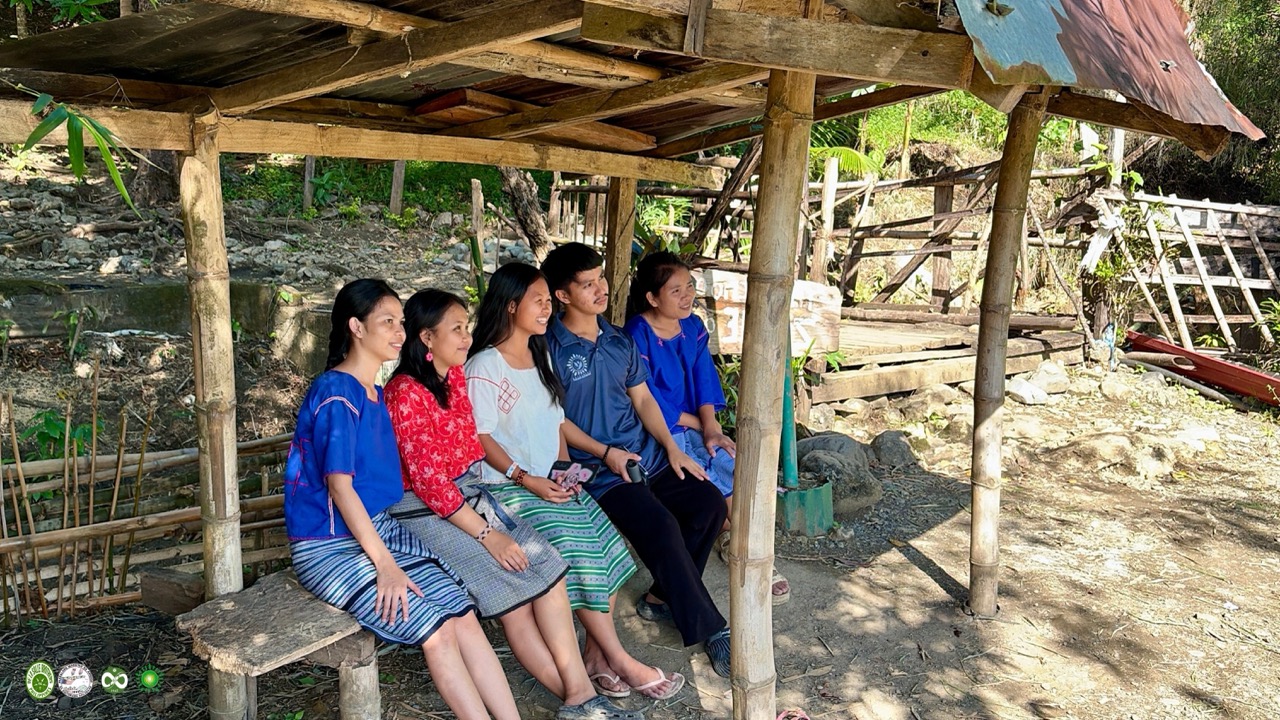
These newly licensed educators represent a historic first for both their respective Indigenous Peoples communities and to the Lasallian family. 

Brixster Bacao, a Tinguian from Abra
Matilde Suklob, a Mangyan Hanunuo from Oriental Mindoro
Me-an Antao, a Mangyan Buhid from Oriental Mindoro
Zyra No-oy, a Mangyan Buhid from Oriental Mindoro

make up this inspiring group. Together, they comprise the pioneer batch of Indigenous Peoples Education Scholarship and Mentoring Program at De La Salle Lipa (DLSL), as well as the very first batch of Indigenous Peoples (IP) volunteers in the LSVP.

The path to this success was paved by collaboration, deep trust, and an unwavering commitment to education. Their journey began when they were endorsed by the Holy Spirit Sisters (SSpS) to De La Salle Philippines, securing their college scholarships at De La Salle Lipa. In July 2025, they graduated, carrying with them the hopes and dreams of their communities. Rather than focusing solely on preparing for the March 2026 licensure exam, these graduates chose a path of service, returning to their Lupaing Ninuno (ancestral land) as full-time volunteers under the LSVP.

During their ten-month long-term engagement, the volunteers were deployed to Paaralang Mangyan na Angkop sa Kulturang Aalagaan (PAMANA KA) in San Jose, Occidental Mindoro. At the heart of the LSVP’s mission is the commitment to a mutually transformative experience. For these communities, seeing their scholars return home to serve after four years of college education was the fulfillment of a long-held dream. On the ground, the volunteers actively addressed the immediate needs of the school by strengthening English and Filipino literacy. Yet, beyond academic lessons, their mere presence in the classroom and community was their greatest contribution, standing before the young Mangyan learners as living role models of what is possible and achievable for their own future. 

This milestone would not have been possible without the collective effort of a supportive community. Heartfelt gratitude is extended to the Holy Spirit Sisters (SSpS), who believed in their potential and guided them from the very start; to De La Salle Lipa, for providing a nurturing college scholarship and serving as their animating ground as Lasallians; to Paaralang Mangyan na Angkop sa Kulturang Aalagaan (PAMANA KA), for providing a space for renewed and rekindled sense of the Indigenous Peoples dreams and aspirations; to the DLSP IP Education Team —- Tr. Banny, Tr. Junette, and Sir Butch, for journeying with them every step of the way; and to the various units and programs of De La Salle Philippines, for their continuous support of these individuals. As St. John Baptist De La Salle once wrote, “to be entrusted with the teaching of the young is a great gift and grace of God”.

One Life. Live it. Volunteer! 
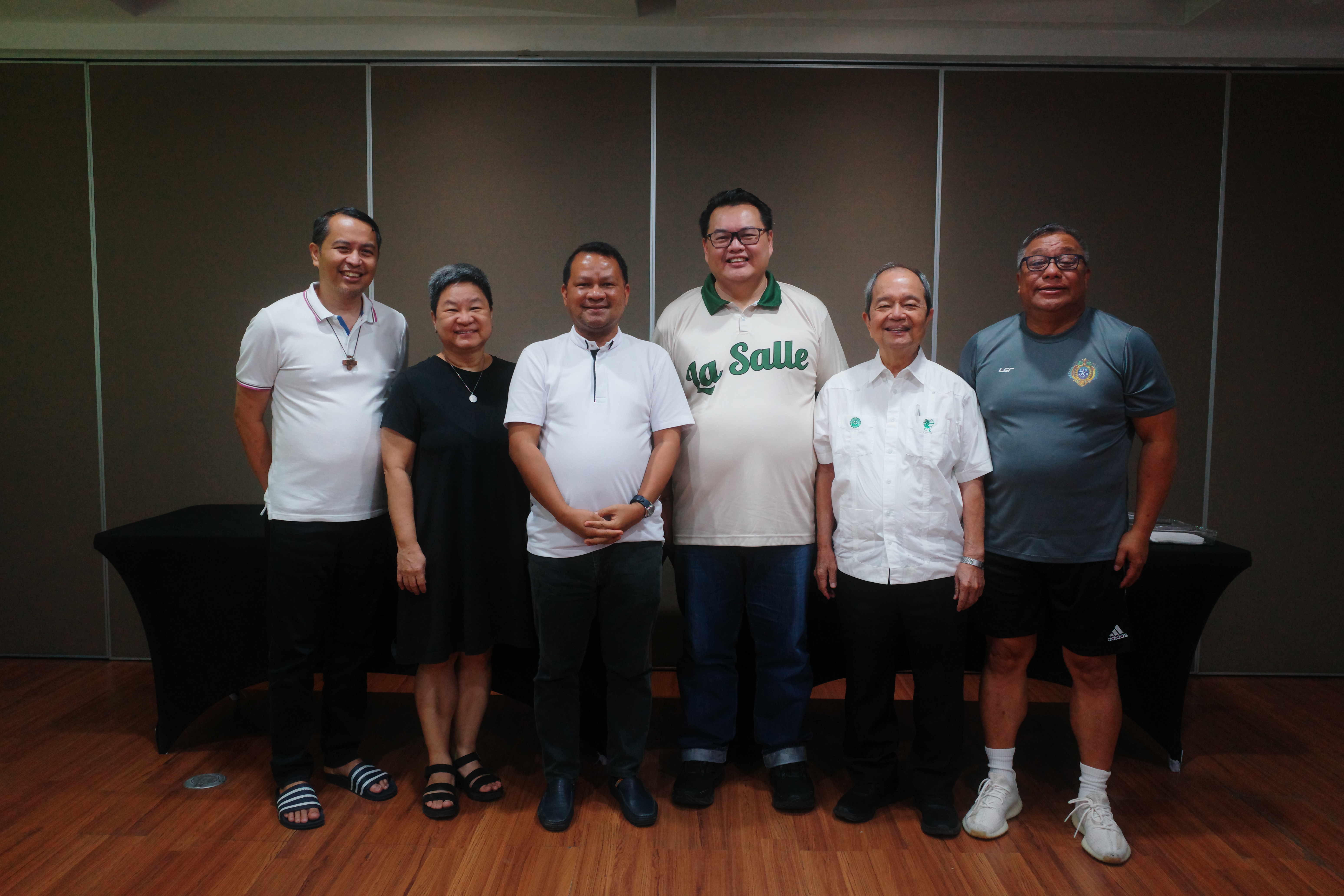
A team of De La Salle Brothers of the Philippine Sector recently gathered for a three-day writing workshop to refine and complete their Safeguarding Manual, a living document that defines how the Brothers understand and practice the protection of minors and vulnerable adults in all their ministries across the Philippines.

The workshop brought together Br. Felipe Belleza FSC, Br. Mandy Dujunco FSC, Br. Ray Suplido FSC, and Br. John Ong FSC, with facilitation provided by Fr. Jigs Rosalinda JCD and Ms. Thea Quintos of the Catholic Safeguarding Institute.

Over three days, the group worked through the theological, legal, and procedural dimensions of safeguarding, moving from foundational principles to practical protocols. The result is a comprehensive manual that covers everything from canonical and civil law obligations to reporting templates, case processing procedures, and the care of Brothers throughout the entire safeguarding process.

Rooted in the Lasallian Tradition
What sets this manual apart is where it begins. Rather than opening with policy language, it opens with the words of Saint John Baptist de La Salle himself, from the Meditations for the Time of Retreat:

"God has provided in giving children teachers whom he has charged with this care and to whom he has given the concern and the vigilance not only to prevent anything whatsoever harmful to their salvation from capturing their hearts but also to guide the children through all the dangers they meet in the world. Ask God today for the grace to watch so well over the children confided to you." -St. John Baptist de La Salle, Meditation #194.1

From this foundation, the manual makes a deliberate theological claim: safeguarding is not a compliance exercise imposed on the Brothers from outside. It is "a spiritual and moral imperative, woven into the very identity of what it means to be a Lasallian Brother." This framing shaped the tone of the entire workshop. The question the group kept returning to was not simply "what are we required to do?" but "who are we called to be?"

A Culture, Not Just a Policy
One of the recurring themes across the three days was the difference between having a safeguarding policy and having a safeguarding culture. The manual captures this distinction plainly: "A safeguarding manual alone does not make an organization safe. Safety is built through culture."

The workshop was not the end of a process but a significant moment within one. The manual will continue to be refined and will be subject to regular review. What the three days produced is a serious, grounded document that the Philippine Sector can stand behind, one that takes both the protection of the vulnerable and the integrity of the Brothers seriously, and refuses to treat those two commitments as being in tension with each other.

As the manual puts it in its opening pages: "Safeguarding is not a restriction upon ministry. It is ministry."
 

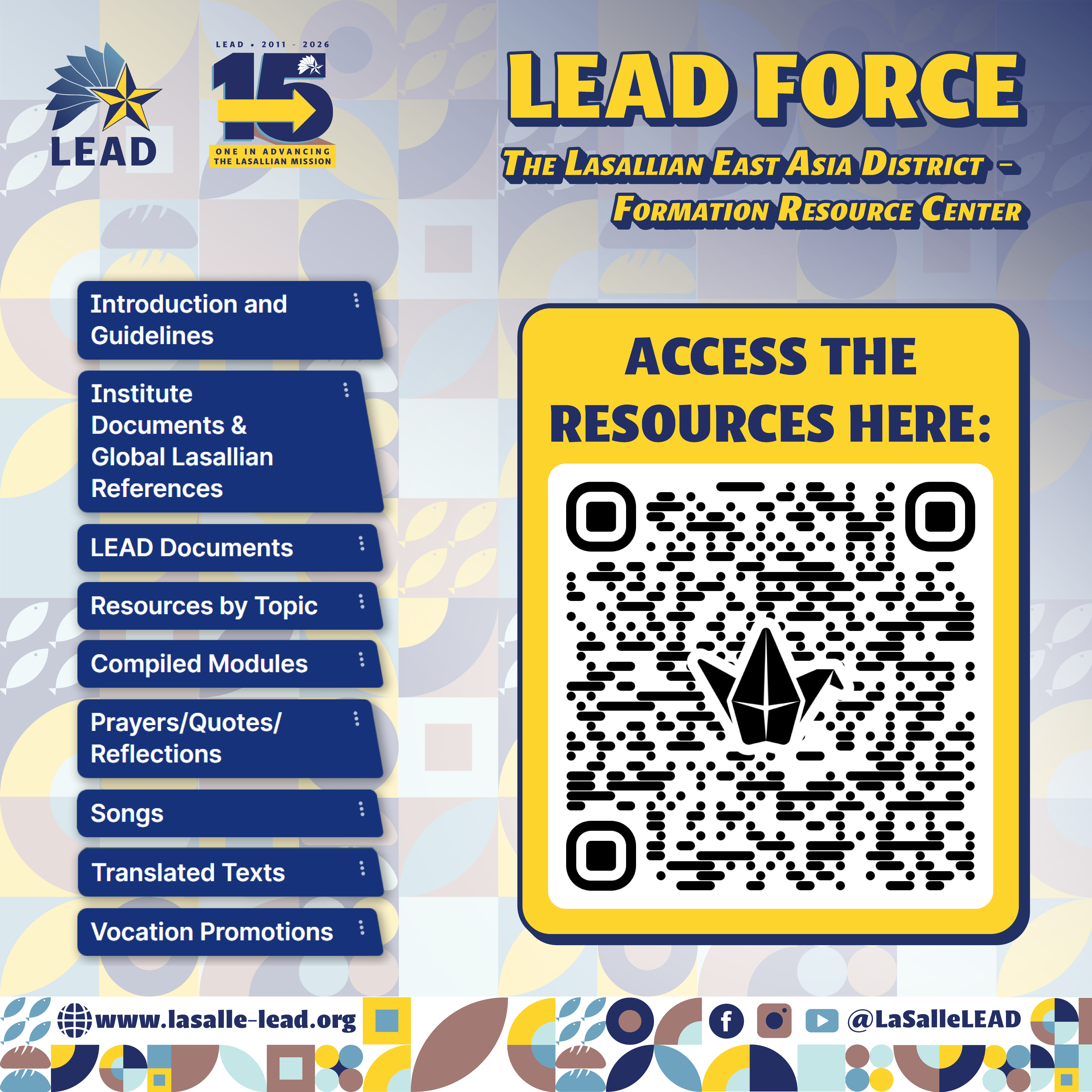
Across the diverse sectors and institutions of the Lasallian East Asia District (LEAD), formation initiatives are thriving. An incredible wealth of modules, presentations, reflection guides, and prayers are crafted by dedicated formators over time. Yet, for years, the limited sharing of these materials meant brilliant ideas remained siloed—resulting in a duplication of effort and making it difficult for formators to access quality materials when they needed them most.

To bridge this gap, the LEAD Formation for Shared Mission Committee prioritized a vital initiative in its 2024–2027 Strategic Plan: the creation of LEAD Force: The Lasallian East Asia District - Formation Resource Center. 

Driven by the need for a consolidated, accessible, and sustainable repository, LEAD Force is the official formation resource platform designed to sustain ongoing Lasallian formation across the entire network. The commitment is simple yet profound: pool materials into a shared database, disseminate them across sectors, and localize documents to ensure they are deeply relevant to the unique cultural contexts of East Asia.

A Living, Practical Space

LEAD Force does not seek to replicate existing Lasallian resource centers, publications, or official repositories. Instead, it serves as a practical, collaborative space for shared ministry. Here, formators can access, adapt, and contribute resources in fully editable, multimedia formats. Recognizing that many educators look for a reliable place to begin when designing new formation experiences, the platform actively seeks to lessen the burden of creating materials entirely from scratch.

More than a repository of polished resources, LEAD Force welcomes materials that have been developed and used in actual formation settings—whether they are complete modules, presentations, reflection guides, or other working files in multimedia formats. While some of these resources may have been developed and used in the past, and may require updating or contextualization, they continue to embody enduring Lasallian values and formation wisdom that can inspire and inform present-day practice.

Driving the Mission Forward

Ultimately, LEAD Force is envisioned as a growing community resource, enriched by the collective generosity of those willing to share their time, experiences, and expertise. As more formators and educators contribute, refine, and adapt these tools, the platform transcends being a mere collection of digital documents. It becomes a living expression of shared mission, vibrant collaboration, and a collective commitment to strengthening Lasallian formation across the District.

LEAD Force. Your partner in Formation. Your link to the Mission.