LEAD Story 452

The La Salle Centre, represented by Mr. Isaac Stephens (Centre Director), Br. Mico de Leon FSC (Vocations Director), and Mr. Adrian David (Programme Coordinator), went on a vocation promotion visit to Sabah.

On 7 November, the team visited La Salle Kota Kinabalu. Br. Mico engaged Catholic students in learning about Lasallian identity and the core values of faith, service, and community, while also guiding them in the Lasallian Prayers and sharing the inspiring story of St. John Baptist de La Salle and his own vocation journey.

On the second day, 8 November, they visited SMK St. Martin's Tambunan for an inspiring session with members of the Lasallian Youth Movement. 

The session explored the Lasallian identity, the core values of faith, service, and community, and included a time of prayer through the Lasallian Prayers.

It also underscored that the Lasallian story begins with us — a call for every Lasallian to carry forward the legacy of St. John Baptist de La Salle in their schools and communities. One student shared how the Founder’s life continues to inspire her to live out her vocation with perseverance and faith, even amid challenges.

A Journey of Reflection, Creativity, and Ecological Commitment

The 1st Lasallian East Asia District International EcoCamp 2025 brought together young Lasallians from across the region for four days of learning, community, and care for creation. From their arrival in Manila, participants were welcomed into a serene, green environment that embodied the spirit of faith and stewardship.

Day 1 opened with prayer, reflection, and orientation, highlighted by messages from Br. Iñigo Riola FSC and Br. Jeano Endaya FSC, emphasizing the interconnectedness of all creation and the shared responsibility to care for our common home. LIFE Director Mark Tinao energized the campers, setting a hopeful and spirited tone for the days ahead.

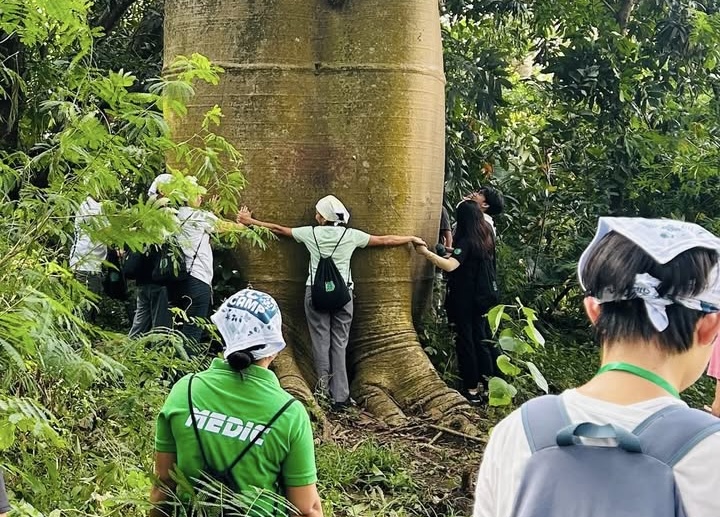
Day 2 deepened ecological awareness as participants embarked on a reflective Nature Trail Hike. In the afternoon, Mr. Antonio Carlos Maralit and Sr. Elizabeth “Bing” Carranza, TST guided sessions on Laudato Si’ and ecological conversion, linking faith with environmental responsibility. The day concluded with an inspiring talk by Mr. Chuck Baclagon of 350.org, encouraging youth leadership and collective action for climate justice.

Day 3 celebrated creativity and community through team-building activities, followed by a thought-provoking session with muralist A.G. Saño on art as advocacy and love for creation. With 350 Pilipinas, campers explored artivism through hands-on screen printing and poster-making. The day ended with a campfire eco-reflection led by Br. Aikee Esmeli FSC, grounding the experience in gratitude and renewed commitment.

On the final day, participants visited DLSU–Dasmariñas and the Santuario De La Salle in DLSU–Laguna, closing their EcoCamp journey with a strengthened sense of mission and Lasallian identity.

As delegates return to their homes, they carry with them the lessons, friendships, and resolve to protect our common home. EcoCamp has ended, but the mission to care for creation continues.

Watch the 1st LEAD Eco Camp recap video here: https://www.facebook.com/share/v/1Ae77rwtX4/

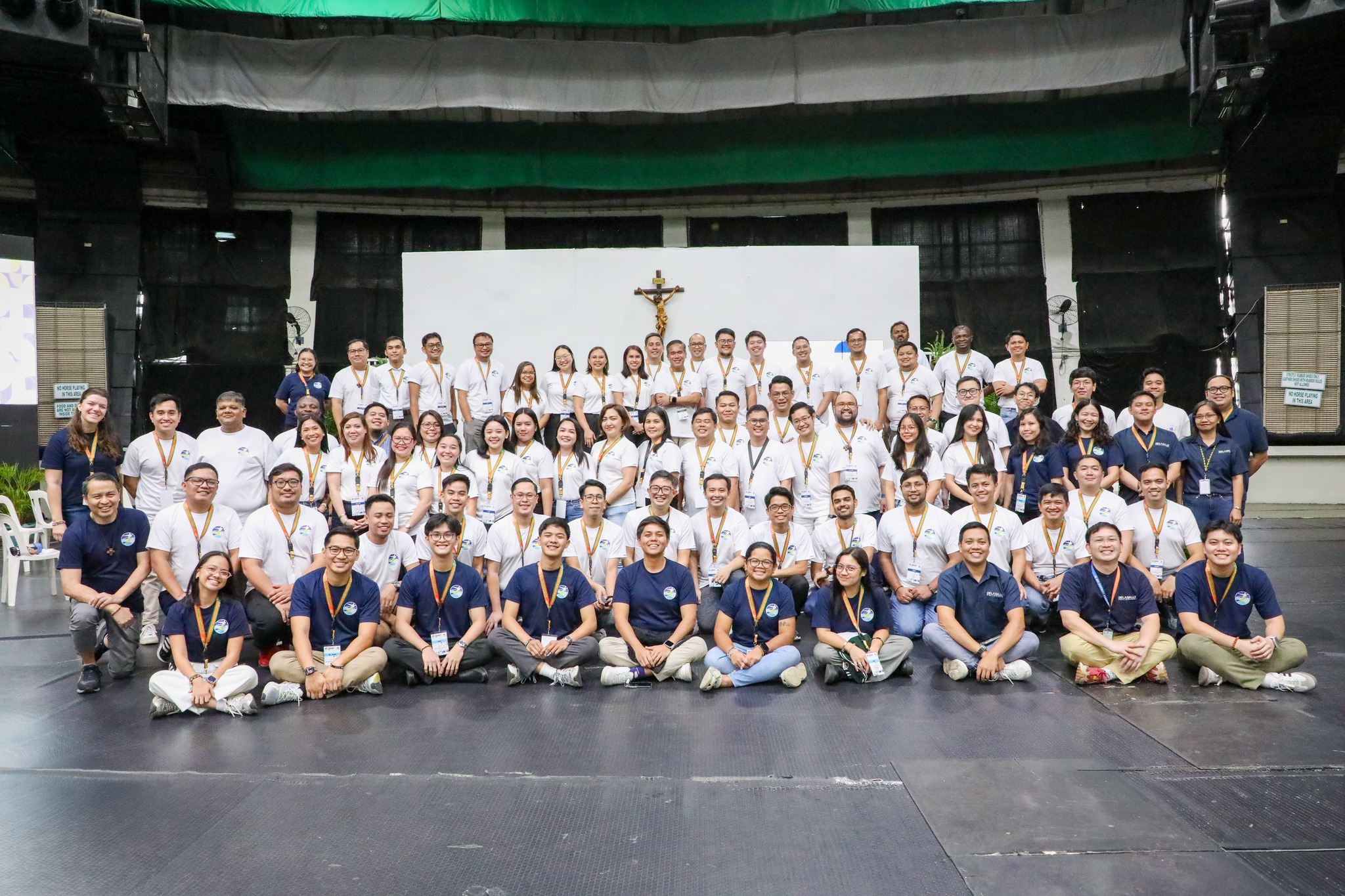
This year’s LEAD Joint Councils Workshop (JCW 2025) has opened at De La Salle University–Dasmariñas, carrying the theme “We Are Pilgrims of Hope to the Peripheries.”

Day 1 of JCW 2025 was a reminder that those gathered form a community on the move, journeying together in faith and service. In his opening remarks, Br. JJ Jimenez FSC, LEAD Visitor, invited the participants to keep welcoming and accompanying “fresh faces”—a vital pathway to growing the community of Lasallian leaders in East Asia and sustaining the mission in our District. Ms. Thea Quintos, formerly from De La Salle–College of Saint Benilde (Philippines), led a morning recollection centered on the Gospel story of the road to Emmaus and facilitated an afternoon workshop on building stronger communities.

The second day of JCW 2025 featured a series of committee meetings and plenary sessions. Morning conversations focused on each Committee’s accomplishments over the past year, with time for participants to offer commendations and recommendations after every report. In the afternoon, the Committees revisited their strategic plans—discerning which initiatives to stop, continue, or start now that they are at the midpoint of their terms. The day concluded with a presentation of the draft LEAD Viability Plan by the Viability & Vitality Committee, followed by an open call for suggestions on how to enrich and strengthen the proposal.

The third and final day of JCW 2025 was an invitation to stand in deeper solidarity with those in the peripheries. The District Communications Team presented their proposed advocacy strategy, Lasallians for Life, a campaign designed to encourage more Lasallians to actively participate in and support the District’s ministries for the peripheries—in whatever capacity: as advocates, volunteers, benefactors, and more. The joint councils expressed their collective commitment to strengthening and promoting these advocacies.

The day concluded with the participants of JCW 2025 joining the celebration of the Profession of First Vows of Br. Polycarp Lal Than Mawi FSC from Myanmar and the Perpetual Vows of Br. Ivan Umali FSC, whose vocation has been deeply shaped by his experience of association with our brothers and sisters in Mindanao.

The members of the LEAD District and Mission Councils return to their respective Sectors with renewed commitment to growing the Lasallian mission in the peripheries—together and by association.

The LEAD Joint Councils Workshop is an annual collaborative gathering of the District’s six Working Committees—each composed of members of the LEAD District and Mission Councils—who come together to reflect, discern, and plan for the life and mission of the District.

This joint initiative between the De La Salle Philippines-Lasallian Mission Services and the LEAD Life of the Brothers, and LEAD Youth and Vocations Committee gathered youth formators, ministers, and educators for a three-day program that consists of plenary sessions and workshops. 

Day one's highlight is the message and keynote of LEAD Brother Visitor, Br. JJ Jimenez FSC, that invited the participants to be companions who enable young people to be more and experience more. Following the message, Mr. Troy Calimlim from the ASEAN Youth Organization gave an input regarding the State of Young People today. He was soon joined by Dr. Rose Marie Salazar-Clemeña, Professor Emeritus and University Fellow of De La Salle University, and Mr. Raphael Hari-Ong, Ms. Andrea Ysabelle Suarez, and Mr. Ashkin Jacob Cajucom — all young Lasallian leaders— in a panel discussion moderated by Ms. Aira Romero, Chairperson of the Lasallian Youth Commission. The afternoon was devoted for different workshops facilitated by our resource persons. 

Day two focused on the work of Lasallian youth formation.

The day started with a guided conversation on challenges and best practices facilitated by Br. John Ong FSC. Br. John also introduced the SOAR Framework that will be used throughout the remaining reflection session and groupings. 

We were also joined by Hon. Guill Marc D. Mariano, City Councilor of the Municipality of Isabela and alumnus of De La Salle-College of St. Benilde, and shared with us his experience as a young Lasallian leader whose life is deeply influenced by formators who journeyed with him. The third plenary session was skillfully led by Mr. Keane Palatino, Director of Communications of the District of Eastern and North America and former Intl. Coordinator of the Intl. Council of Young Lasallians. His resounding message was youth formation is not separate from our Lasallian mission, but the very essence of it. Workshops were held in the afternoon, and our special thanks to the following for facilitating for two days: 

Fr. Jordan Orbe SJ- Vocations and Discernment 
Ms. Julia Mayer- Forming Youth Leaders
Mr. Rodne Galicha- Social Justice and Ecology 
Ms. Dynes Asiatico and Mr. Kent Alfred San Felipe- Basic Skills on Coaching and Mentoring

The last day started with a plenary session on Safeguarding facilitated by Sr. Weeyaa Villanueva RNDM. The participants were invited to reflect on how we can create spaces within ourselves, and in turn, our communities. 

Br. Jeano Endaya FSC also led a session that allowed the participants to share their dreams and aspirations for themselves and the young people entrusted to their care. 

Finally, the afternoon was dedicated to consolidating all the learnings from the past three days into an output. 

We thank all the Brothers, Partners, and resource speakers who attended and made the 2025 FOYA. 

Originally published in The Gateway Issue No. 64 (March 2016)

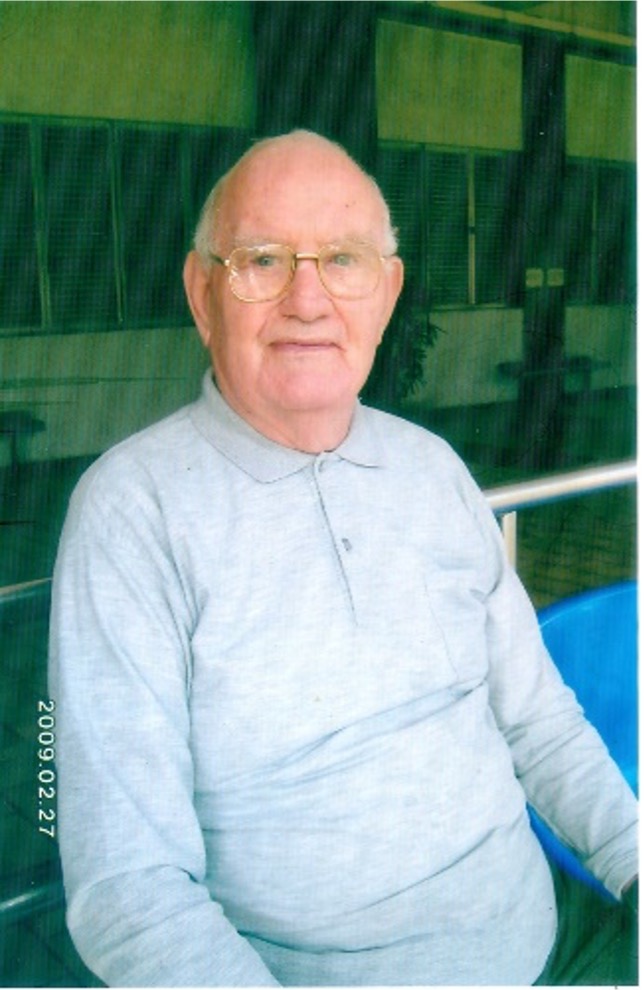
There is a picturesque village on the outskirts of Dublin city, Ireland, called Rathcoole. It faces lush pasture land and has a fine view of the rolling hills of Dublin. In this village was born James Maurice Fitzgerald, later to be called in religion Brother Hyacinth. He was the eldest of four and the only boy. His sisters were named Kay, Joan and Evean. Evean is the only surviving sister and lives in New York. 
One Brother remembers: “Many, many years ago I stopped at the lovely village of Rathcoole and visited Brother Hyacinth at home. I found him sitting quietly in the parlour, doing the crossword I believe. Lunch was being prepared by his mother and I could feel the close relationship of mother and son. They kept up a regular letter correspondence all through life and he often spoke about her. After all, she had generously given up her only son to the religious life of the Brothers.”

Brother Hyacinth went to Primary school in a town called Naas, a school run by the Irish Christian Brothers. Come whatever kind of weather, he and a friend would cycle there every school day, a round trip of about 35 kilometres. No excuse was taken for being late to school. You were just told to stretch out your hand and given six of the best. Caning was the norm. Those were the times.

Brother Hyacinth often told the story of how he and his friend were meant to join the Irish Christian Brothers but, because of a set of circumstances, ended up with the De La Salle Brothers. Before he joined the Brothers, he had visions of joining the air cadets and perhaps of becoming a sportsman. 

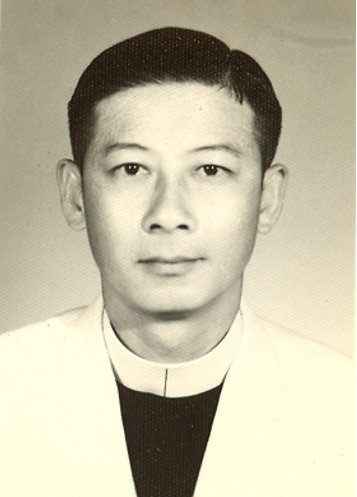
If you came across Brother Hyacinth in later life, you would be forgiven for thinking that he was always a substantial, strongly-built man. Yet, early photos show him to be very trim…and handsome too!
After following the usual years of formation as a young De La Salle Brother in Ireland, he was selected for missionary work and was assigned first to Malaysia. On the journey East, he was in the company of Brothers Vincent Corkery and Casimir Hannon and they were in the care of Br Remigius Blake who was returning to Singapore. Their ship left Southampton 22 Oct 1948. Brother Vincent recalls:
“On board he spent hours playing deck quoits, deck tennis and swimming. He excelled in these. He relished the usual stops along the way arriving in Penang 14 November 1948. Penang harbour was decked out with bunting and special lights in celebration of the birth of Prince Charles.

After spending a day or two in Penang, it was off to Singapore, where he was taken to St Patrick's.  In no time he got into badminton and played for hours, as well as swimming in the sea, nearby in those days.”

After Christmas he got posted to Penang where he fitted in very well with a host of young Brothers, local and Irish, under the benign rule of Br Fintan. He taught English, Religious Studies, Economics and Commerce. He is still fondly remembered there, and particularly in East Malaysia, in the towns of Kuching and Sibu. 

Brother Hyacinth was in his prime during those years. He was physically imposing, taught strictly but fairly and took part in school activities, especially by playing and training badminton players. He loved that game and played it right up to retirement when he was in Chan Sui Ki (La Salle) College, Hong Kong. He was also a fan of rugby and fancied himself as a player and would occasionally tackle some formidable Brother opponents in a kind of scrum. All harmless fun.

There was one extended break from teaching and that was for university studies. He took English, Music and French, in University College Dublin, from 1960 to 1963. He spent one summer holiday in France, polishing up his French. In later years he liked to sing French songs, with proper French expression. He was a particular fan of Edith Piaf. He himself loved to be asked to sing or to play either the violin or the mouthorgan, all of which he did with gusto. A particular favourite was an English translation of the Chinese ‘Flower Drum Song.’  He would also listen to songs sung in Mandarin and try to imitate. Some people thought he was fluent in the language! 

After spending about thirty five years as a teacher in Malaysia he had reached the age of fifty five. Malaysian law at the time required that teachers retire at the age of 55. Brother Hyacinth did not want to retire. He and his friend Brother Mark Blake found ready acceptance by Brother Raphael Egan in Hong Kong. Brother Hyacinth was assigned to Chan Sui Ki (La Salle) College and had another 10 years of productive teaching, mainly of English and Religious Studies. Chan Sui Ki College became his home for about 20 years, pre and post retirement. He loved the school and rejoiced in its achievements. 
At one stage he took up learning the computer but it soon became evident that it was not his cup of tea. Much more to his taste was doing the crosswords found in both Hong Kong and Irish newspapers. In this, he joined Brother Mark and they would often consult each other as to the correct crossword solutions. He also tried his hand at learning Cantonese but, as he put it himself, “my 72 year old mental computer is rusty, so success is slow.”

For many years he was afflicted with hardness of hearing. It was diagnosed as tinnitus. It reached a stage when he would get lost during community prayer and be constantly looking for the right page. He could also pick things up wrongly and his responses were often amusing.

During those years in Hong Kong he used to climb Lion Rock regularly with Brothers Mark and Patrick. The latter remembers:

“On one memorable occasion, a group of us went climbing in the New Territories and managed 5 pretty steep mountains in a row. It was a bitterly cold day, around 0 degrees, and Brother Hyacinth was in shorts and short-sleeve shirt! On the way home, a group of young men spotted us and shouted “Tarzon” at Hyacinth. He felt good about that. A time came, however, when he let us off on our own and he would climb at his own pace. Later still he confined himself to ‘local’ walks. His knees began to cause some trouble and he wobbled and even fell a few times. It was time to engage home care.” 

Brother Hyacinth came to live in La Salle College in 2004. He would often introduce himself to guests as “the little flower.” Since he was still a physically big man, this ‘little flower’ introduction took some people aback, until the humour dawned. It was fitting that his funeral Mass was celebrated in the church of the little flower, St. Teresa of Liseaux. Like St. Teresa, Brother Hyacinth led a simple, straightforward life, trying to do ordinary things to the best of his ability. He tried to follow the little way. 

At first, health-wise, all went well but his was a slow decline into Alzheimers disease. His memory played all kinds of tricks and he would ask the same question time and time again. At first it was hardly noticeable but as the years went by it became much more pronounced. Part of the problem was that he could surprise people at times by remembering things quite clearly. It was also noticed that he ate his food very quickly and would be finished well before the rest.  It was only later that the doctor informed us that much of the food lay undigested in his stomach.
When he had to resort to a wheelchair to get around, his carer would take him down to the lower floors of the school where he would watch the students coming and going and especially watch them playing football. He missed being in the thick of things. 

A number of visits to St Teresa’s Hospital indicated that the time for more professional care had been reached. Fortunately a room and bed was found in the newly-opened Unit for the Elderly in the hospital where Brother Hyacinth received continuous and loving care until his death, was bathed every day and fed regularly. But complications set in, including suspected cancer, obstruction of the biliary duct, diabetes and jaundice.

The end came quickly and quietly at about 12.55am on the 14th December 2014.

In the gospel reading for the funeral Mass, the apostle Thomas asked about the way, the way to follow Christ. Brother Hyacinth found the way to Christ in his life as a De La Salle Brother. He kept his eye on the goal, persevered in his vocation and will now surely enjoy the banquet referred to in the first reading.

Special thanks go to the Mass celebrant, Fr. Gabriel, the altar servers and choir from La Salle College, the readers, photographers, prefects, student association members and scouts from Chan Sui Ki College, the Sisters and nurses of St. Teresa’s Hospital who took Brother Hyacinth to their hearts and Ah Ying, the faithful carer at La Salle College, the Kowloon Funeral Parlour who attended to so many details, all those who sent flower wreaths and donations and the funeral organizing committee who took their task with seriousness and devotion.

Brother Hyacinth was laid to rest in the Brother’s plot in St. Michael’s Cemetery, Happy Valley.

Originally published in The Gateway Issue No. 49 (November 2013)

‘Principal of Principles’ declares one.
‘A tough cookie’ says another.
‘Order and discipline’ says another.
‘A man of steel’ says another.

One thing for sure. When it came to learning, Brother Alphonsus never took no for an answer. All pupils could learn; all pupils would learn; and all pupils did learn.

Brother Alphonsus was born in Ipoh, Malaysia in 1928, a famous tin-mining city. He was the sixth child in a family of 5 boys and 5 girls. He started his studies in the prestigious St. Michael's Institution (SMI) run by the De La Salle Brothers. His studies were interrupted during the War during which time he stayed at the farm of his father in Ipoh. He spent his time planting potatoes and vegetables. After the War, he resumed his studies in St. Michael’s.

His Leaving Certificate Report from St. Michael’s has the following remarks: “A reliable Prefect, a keen sportsman and one who gave full satisfaction to his teachers by his obedience, diligence and exemplary conduct, and was a source of continual edification to his fellow students.” It will not surprise those who knew him that he was diligent and of good conduct, but it will be surprising to learn that he was a good sportsman. In fact, he would later take physical education courses and became a qualified athletics coach. 
   
In January 1948, soon after graduation, he started his teaching career in St. Michael’s. He would be termed a ‘student teacher’ at this stage. While studying and teaching there, he became attracted to the Catholic way of life. He and his family, apart from his father, were converted to the faith. Brother Alphonsus was baptized on the 2nd December 1949 at the age of twenty one. It was not only the Catholic way of life that attracted him. He also became attracted to the Brothers way of life, especially to their regular and harmonious lifestyle. He was impressed by the devotion, kindness and dedication of the Brothers who taught him. In 1954, rather against the wishes of his father, he asked to join the Institute of the Brothers of the Christian Schools.

This necessitated a move to Penang for his Novitiate and further scholastic and teacher training. His first teaching assignment as a Brother, in 1957, was in St Xavier’s Branch School, Penang, and to this day his former students can remember him very well. The school catered mainly to the less well-off pupils. Right from day one, Brother Alphonsus insisted on hard work and the learning of each topic fully. If success in examinations required relentless drilling then relentless drilling it would be. This is how one of his students at the time puts it: “I never did the work assigned to the class and never opened the books to read. Each week report card had a string of marks in red and each Monday I had to face Brother Alphonsus. I was a stubborn boy and no amount of scolding by Brother could change my habits. It was a test of patience, and this went on for nearly half a year”. That is, until Brother Alphonsus won out!

He would play badminton with the staff and was the teacher-in-charge of the school football team. He was proud of its achievements because it could sometimes even beat teams from its big parent school, St Xavier’s.

His superiors were far-seeing enough to realize the importance of academic qualifications and sent him to Sydney to study for a degree. He went to the University of New South Wales in 1963 and obtained a Bachelor of Science degree in 1967, majoring in Pure Mathematics. Then it was back to teaching in Singapore and Malaysia, concentrating mainly on Mathematics, Physics and Chemistry.
 
The major transfer of his life occurred in 1968 when he was sent to La Salle College, Hong Kong. And, apart from two years, there he remained for the rest of his life. He became the Principal of De La Salle Secondary School, Fanling in 1971. This post probably came too early in his career and, after one year, he returned to regular teaching in La Salle College.

As a teacher, he was serious, meticulous in every detail and did not joke in class. He firmly believed in the necessity of good order and discipline as well as hard work. Students were drilled, and sometimes grilled, until they understood the subject. They might at first have thought he was very strict but when they did well in examinations they saw the whole purpose of the exercise. He also found time for two extra-curricular activities, taking charge of a Legion of Mary Praesidium and becoming teacher-in-charge of the school tennis team. 

Life was moving along predictable lines when, pretty suddenly, in 1977, he was drawn into a massive project involving the demolition and redevelopment of the original La Salle College building. The Brothers had taken the hard decision that demolition of the much-loved old school was preferable to repairing and/or building an extension. Brother Alphonsus himself puts it this way in an article he entitled ‘A Bold Venture – Crossing the Rubricon’: “There were several options on how best to do it and each had its own merits and demerits. There was even tension between ‘sentimentalists’ and ‘functionalists’. The former would like to preserve the ‘Majestic Dome’ while the latter was ready to sacrifice it in order to proceed with the best option. The prime determining factor was funding. What followed has become history!”

Brother Alphonsus and Brother Thomas Lavin were detailed by the school principal, Brother Raphael Egan, to look into every detail and to oversee the entire project. They took the assignment very seriously, checked every detail, studied what they did not understand until understanding came and followed up with architects and contractors. Brother Alphonsus pored over drawings and blueprints and examined all furniture and equipment. There was hardly a nut or bolt, a pipe or conduit, a desk or chair that he did not know about. He never sought the limelight but worked tenaciously behind the scenes. He wanted the best for La Salle and got it. The new school building, though lacking the majesty of the dome, was seen by many as the most modern and functional of any school in the region. In fact, many passers-by thought it was a university. 

The countless hours of toil and concentration took its toll and there were times when Brother Alphonsus felt that all his efforts were not appreciated. Perhaps this was because he tried to do everything himself and to be on top of everything. Such could be a lonely role. In this situation, a poem by Helen Steiner Rice seems to have sustained him. He had circled the title and underlined a number of lines. The poem is as follows:

Talk It Over With God

You're worried and troubled about everything,
Wondering and fearing what tomorrow will bring,
You long to tell someone, for you feel so alone,
But your friends are all burdened
with cares of their own.

There is only one place and only one Friend
Who is never too busy, and you can always depend
On Him to be waiting, with arms open wide
To hear all the troubles you came to confide . . .
For the heavenly Father will always be there
When you seek Him and find Him
at the altar of prayer.

The next big assignment came with the changing of the guards in September 1984. This time he was asked to be the Principal of La Salle College. The 1980’s was a restless time, characterized by the migratory phenomenon caused by the impending return of Hong Kong to China. Teachers came and went. Many preferred the greener pastures of the private sector. Despite the times, the school managed to maintain high academic standards with a number of pupils achieving the coveted 9A’s in the public examinations. Good discipline and order was maintained. La Salle College captured the Overall Championship in the Interschool Athletics Meet for 5 consecutive years. The soccer team, volleyball team, squash team, fencing team and the swimming team dominated the interschool competitions. By 1991, the Omega Rose Bowl, the symbol of overall supremacy in sports, remained the school’s prized possession for 17 consecutive years. 

Brother Alphonsus paid particular attention to the Catholic life of the school, establishing the Catholic Society and supporting the Legion of Mary. Rosary was said before school in the chapel and the monthly Mass was attended by all Catholic pupils.

As mentioned, he believed in or¬der and discipline. Routine must be adhered to. He accepted no excuses. However, the following little story shows that his bark could be worse than his bite.

In 1988 a Form 7 boy was leaving Hong Kong for the USA. Two boys were ‘selected’ by their classmates to speak to Brother Alphonsus. “We went to the Principal's Office early in the morning, hands and feet trembling. What we had in mind were: "Why the two of us?" Brother Alphonsus asked why we wanted to speak to him. I answered, ‘Master Y is leaving today and ...’ Well, I dared not continue but my companion finished my sentence saying, ‘and we want to wish him farewell at the airport.’ We waited quietly for his answer. After one or two seconds Brother Alphonsus asked quietly, ‘What is his departure time?’ ‘About 3 o'clock and we want to skip the last lesson.’ We stood there for another 5 seconds. ‘Boys of F.7C can go. Give me the names of the other students who wish to go. You can leave after lunch time.’ Well, now I know what the Bible means by ‘Ask and you will receive.’”

The two terms as Principal were up in 1990 and Brother Alphonsus retired from the job. As he puts it himself: “I took centre stage without any fanfare in September 1984 and retired in similar fashion in September 1990.” Not quite full retirement. There was a further year of teaching at Chong Gene Hang College on Hong Kong Island before he hung up his boots.

While he did not go around smiling all day, you would often see him smiling broadly in the company of old boys. Somehow they had a way of bringing out his human and even humourous side. He often enquired about them and their families and was very pleased when they were doing well. The same went for the school auxiliary staff, the janitors and security personnel with whom he frequently chatted.

As a member of the Brothers Community, we could be certain that Brother Alphonsus would always be where he was supposed to be, be it in the chapel for prayer or in the dining room for meals. He followed a regular and predictable timetable. Brother Patrick has this to say:

“Since I was living in the next room for twenty three years, I knew I could set my watch by him. In fact there was hardly any need for a watch. He would rise early and, after ablutions, head for the chapel. If he were not around we would ask questions. I don’t know how he spoke with God, but every day he would be at his place in chapel. He took his religion seriously and loved the Mass and the Rosary. His special devotion was to our Lady and the Legion of Mary therefore appealed to him.”

On the personal preference side, Brother Alphonsus was never seen to take soup, eat dessert or sing a song. He felt that all sweet stuff was not good for the health. As for singing, we don’t know if he had a note in his head. In leisure time, he very much liked to read Catholic magazines and newspapers and spent time emailing.

The first indications that his health was not so good came a good many years ago when we learned that he had contracted a form of leukaemia. He got good medication for it but developed a hard, raking cough which took a lot out of him. He fought his condition long and hard but had to be hospitalized every so often, received occasional blood transfusions and gradually began to physically weaken.

In early June of 2013, his doctor indicated that Brother Alphonsus was declining fairly rapidly, because his major organs were weakening. He was in and out of hospital a number of times. He disliked staying too long in the hospital and returned to his Community room as quickly as possible. The final hospitalization, this time in Queen Elizabeth Hospital, came on the night of the 3rd August 2013 when he passed to his Maker.

The funeral Mass and burial were held over to enable relatives to assemble and arrive in Hong Kong. Eleven of them were able to make the trip from Malaysia, including a nephew and a niece. The last rites were held on the 13th August with funeral Mass in St Teresa’s Church followed by burial in St Michael’s Ceetery, Happy Valley. Despite heavy rainfall, there was a large turnout of the Hong Kong Lasallian Family. Fr. Marciano Baptista, S.J., an old boy, was the chief celebrant and Brother Patrick Tierney delivered the eulogy.

Originally published in The Gateway Issue No. 48 (September 2013)

David, the future Brother Xavier, was born to David and Honora Jones on 25th August 1933, the second youngest in a farming family of six boys and one girl, at The Line, Meelin, near Newmarket, Co. Cork, Ireland. Four of the boys went on to join the religious life, two as Presentation Brothers and two as De La Salle Brothers.  “Actually we were brought up in a very religious atmosphere where the father of the family got the children on their knees for the Rosary every evening and if you got off your knees before your father you would be in trouble!” Brother Xavier would maintain that it was the influence of his elder brothers as well as the good example of Brothers from his locality that made up his mind to join the De La Salle Brothers. An elder brother, Francis, who had already joined the De La Salle Brothers, met a sad end in the Scholasticate when he died during the night of a brain haemorrhage. David was to retain an abiding love for his family and for his native county, and spoke frequently of both with pride.

He started school in 1939, the year that the Second World War broke out in Europe. “Food was rationed. In fact, just about everything was rationed. It was not enough to have money. You also had to have coupons. Once you used up your coupons, you could buy nothing.”  He received his early education at the local Primary school before joining the De La Salle Juniorate  in Castletown, Co Laois, in 1947, at the age of 14. In 1950 he advanced to the Novitiate and was given the name Brother Xavier Finbarr in religious life and it was as Brother Xavier that he was known for most of his life in the Far East.  It was in the Novitiate also that he volunteered to serve on the missions, and in 1951 went across to Inglewood Scholasticate in Berkshire, England, to prepare for work in the East. In August 1954, after completion of O and A Level examinations, together with five other young Brothers, he travelled to France and set sail from Marseilles on the liner, the Felix Rousell, for the three weeks voyage to Singapore. 

After being welcomed by the Singapore Brothers the group next took a train north through Malaya to Penang, the headquarters of the District. After a few months in Penang, Brother Xavier was posted to St. Joseph’s Secondary School, Kuching, his first full-time teaching post, in the state of Sarawak on the island of Borneo. Borneo was known as the ‘Land of Headhunters’, and blackened skulls still hang as trophies in the longhouses where people live. It was in Kuching that Xavier refined his skills as a teacher, especially of Religious Studies and English. It was there, also, that he came across a number of those intrepid missionaries called the Mill Hill Fathers, who had been running St Joseph’s before the arrival of the Brothers. Many of the priests worked far away, in jungle territory, and when they returned for some rest and recreation would regale the Brothers with hair-raising or very humourous stories. Brother Xavier had great time for these men in their difficult mission. 

In school, he was a dedicated teacher, well-liked and respected by his students. One of his school Principals at the time was Brother Henry O’Brien who hailed from Brother Xavier’s home county. Brother Henry believed in strict but reasonable discipline and also in correcting the students’ assignments and he led from the front. The staff followed his example. After five years in Kuching, he taught briefly in Sacred Heart School,  Sibu, the second largest town in Sarawak, before returning to England to do his teacher training at Hopwood Hall Training College, Middleton, Manchester,  from 1960-1962.

Hopwood Hall Teacher Training College was run by the De La Salle Brothers. The grounds were spacious. The lecturers were of high calibre. The teaching practices in local schools were well arranged and prospective teachers got a real taste of what their careers would entail. The Director of the Brothers at the time was Brother Maximus Bangs, a scholar and a gentleman, and for whom Brother Xavier had the greatest respect. He thrived in the Training College setting. Since he and a few others were of an older vintage, they were regarded as ‘mature’ students, with a few privileges attached. An added bonus for football fans was the occasional outing to Old Trafford to watch the stars of Manchester United on show, players like Dennis Law, Bobby and Jack Charlton and the peerless George Best. 

In 1962 he returned East and, after some months in Sacred Heart School, Sibu, Sarawak, was posted to St. Mary’s Secondary School, Sandakan, Sabah, on the north-east tip of Borneo, where he taught for five more years. Sandakan is known as ‘Little Hong Kong’ and there Xavier met and taught numerous Chinese students before meeting and teaching many more later in Hong Kong itself. The school Principals during his time in St Mary’s were Brother Raphael Egan and then Brother Fridolin Gaughran. St Mary’s was a homely school with a fine family atmosphere. The jungle was very close, however, which meant that the mosquitoes were also close. There was no air-conditioning, so the mosquito net over the bed was de rigeur. God help the sleeper if there was a hole in the net! Since Sandakan was a little off the beaten track, it was not always easy to have a full complement of teaching staff. Brother Xavier and his companions had to fill in every so often. It was not easy but they took it all in their stride.

Fifty years later, his students at St Mary’s had not forgotten their former teacher and were planning a Grand Reunion in Sandakan for May 31st 2013. They had invited Brother Xavier as Guest of Honour and he had been hoping against hope that he could make it. The Lord intervened, calling him instead to the heavenly banquet.
 In 1967 he was asked to return to Ireland to do his degree studies at University College Dublin and in 1970 he graduated with a BA degree in English, History and Ethics/Politics. A Brother colleague recalls: 

“Brother Xavier took his studies seriously. He collected many reference books, read widely and sought advice when necessary. He was not above relaxing at times and we would head off for a couple of pints of Guinness where, among other things, we would discuss the merits or otherwise of our lecturers. One thing was for sure – Brother Xavier never took his academic results for granted and he worked hard right to the end.”

Another student Brother writes: “Xavier impressed me as a serious man. He took his religious life, his studies and his relationship with others maturely, sensibly and in his stride”, probably in contrast with the younger students around him. But at the same time he had an abiding sense of humour and a hearty laugh. He was noted for his prodigious memory up to the very end and in cases of doubt about past events he was often consulted. In their own dialect his past pupils in Borneo might say, “He had the memory of an old bull elephant”.

On returning to the East in November 1970, he was assigned back to Sandakan in Sabah but had to wait in Hong Kong for a work pass. It never came. And so he was appointed to Hong Kong, which would be his home for the rest of his life in Asia. His first assignment was to St Joseph’s College where he taught for 21 years and where he is described by Brother Thomas Favier, as “a marvellous Brother.” He taught at various levels but gradually made Form 5, the public examination level, his stamping ground. Many a student can thank him for making it through the English and Religious Studies papers. He taught clearly, gave notes and corrected reams of exercise books. Besides English and Religious Studies, he also taught Physical Education, usually called PE. When he could not demonstrate the physical exercises himself, he would get a student to lead. Only after that would he allow the students to play ball games.

Then came promotion in the form of appointment as school Discipline Master. He took this duty seriously, always trying to follow St La Salle’s dictum of being firm but kind. At an interview with the students in 1982, he felt that the overall discipline in the school was better than in the days of old and attributed this largely to the fine boys that came from St Joseph’s Primary School. He felt that our Primary School Principal and staff deserved much credit for turning out such good students. He also distinguished between order and discipline. He would point out that there might be some lack of order at times rather than indiscipline as such. When it came to the question of ‘hair’, Xavier himself sported side-locks and was pretty lenient dealing with hair transgressions. He kept an eye on the fashion trends of the time.

Of course, because of his title as Discipline Master, the boys kept an eye on him. Here is an interesting take from one of them: “I have not had the privilege of being in one of the classes of Brother Xavier, but I will always remember him standing at the main entrance after lunch time ended, waiting for the latecomers including myself. At the sight of him (and before he caught sight of us) we would turn downhill along the Tramway Path to enter through one of the back doors. Now that he is in the Eternal Home, my hope is that I will one day gladly greet him instead of sneaking away if he would again stand at the entrance there.”

In the same interview he was asked for his views on moral education. He felt that it was the most important part of the curriculum. He also stressed that it must have practical application to daily life and not be viewed solely as an examination subject, a chance to score high marks. 

One of his students at the time was studying in Form 5C with Brother Xavier as form master and English teacher. This is his memory:  “Of course, being young and innocent at the time, we automatically thought he was English. One of the boys made the unfortunate mistake of mentioning it to him one day. Now we all know how Brother Xavier used to turn all red when he was upset, and he was red. But he did not get mad at us. He knew the insult was unintentional and due to ignorance. So he said, "Irish! Irish! Not English!”, and he proceeded to give us a lesson in geography as well as the difference between a true Irishman and an Englishman, culturally, morally, and in the creation of all things beautiful! Since then, I personally have had many, many Irish friends over the years. But I never made the mistake of calling an Irishman English again. They would not be as forgiving as Brother Xavier! 

Another student had this very personal encounter: “I really appreciated Brother Xavier who was my Godfather. I really missed him. During his hospitalization, my kids always asked about their God grandfather a lot. I told them that he was getting well. They were preparing a Get Well wish to him..... Brother Xavier helped me and guided me even when I left St Joseph’s College and became a catholic. He never was my school teacher and never taught me any lesson in SJC. How we met was really a miracle. When he was acting Principal in SJC in 1978, he gave me chance and great support when I was young and inexperienced in organizing the Inter-school Badminton Competition. Since then we had built up our relationship. Later when I left SJC, he introduced Father Malone to me and I got baptized. I had the honour to have Brother Xavier as my Godfather. Thank God for giving me a chance to meet such an esteemed person who led me and guided me to become a Catholic and a man as well. I really missed him a lot. I am writing to send my best regards to his family. God Bless!”

For a change and relaxation he would go hiking, usually starting from St Joseph’s and climbing up the rather steep mountain called the Peak, and walking round the road at the top before heading home. These hikes were made sometimes in the company of other Brothers and sometimes alone. This hiking schedule was all the more admirable when we consider that he was now suffering quite a bit from his long-term ailment, ankylosing spondylitis. Brother Xavier would never give in to this affliction and drove himself by sheer will power. The fusion of the vertebrae and curvature of the spine were becoming more and more obvious.  Nowadays, hiking alone and without a cell phone would be considered risky but those were different days. Occasionally, when convenient, he would go for a swim, since this exercise was highly recommended by the doctors.

Brother Xavier, as with the rest of folk, had some pet dislikes. One was of impromptu requests. He wanted to be informed of or invited to functions well in advance. Another was what he regarded as any invasion of privacy. This applied particularly to the Brothers’ Quarters. Since it was the Brother’s home, he felt that people should not drop in unannounced.  On some occasions he would even stand guard during lunch break in case students wandered into the inner sanctum. A third was in the area of authority. He liked a level playing field and, while respecting those in authority, did not believe in undue deference.

A more humourous dislike revolved around the question of good and poor whiskey. He would sing the praises of Black Label as opposed to White, maintaining, against all opposition, that White led to headaches whereas Black would leave you clear-headed!

Whenever there was a sing-song, Brother Xavier would actively join in and usually rendered old favourites like ‘The Banks of my own Lovely Lee’ and ‘Biddy Hogan’ and made it clear that ‘Irish’ songs were to be preferred. That said, he was not at all averse to listening to classical music.

Towards the end of his long term in St Joseph’s, in 1989, he was given a one year career break back in Ireland. During this period he took up a course in theology and philosophy. On his return to Hong Kong, he was asked to teach in Chan Sui Ki (La Salle) College, Kowloon. He had to commute each day through the very busy Cross Harbour Tunnel.

Then, in 1991, he was transferred to teach at La Salle College, Kowloon, to teach part-time. He was now approaching the end of his teaching career, which occurred in 1993 when he officially retired. He tutored one or two students to keep his hand in. In 2003 he returned to the community of St Joseph’s College, his old stomping ground.

By the new millennium the old spondylitis ailment was becoming more and more difficult to bear. A bad fall in the bathroom necessitated a very long hospitalization of over 6 months. Painkillers, physiotherapy  and nursing care eventually made it possible for him to be discharged but a personal career was employed to help rehabilitation. It was around that time that he began to think seriously of a final return to Ireland and this was effected at the end of December 2005. 

He was first accommodated in the Brothers’ care centre for the elderly called Miguel House, Castletown, Co Laois. However, he felt he had not yet reached the stage for round-the-clock care and before long was able to move to the Brother’s community at Ballyfermot, Co Dublin. There he restarted his regimen of hikes and walks around the local parks and would occasionally take the bus into the city. The Brothers took good care of him and he had some good quality retirement years in Ballyfermot. Then, in 2012, he had another fall, while visiting his folk at home, and had to be sent to the Mater Hospital where it was touch and go for a while. An operation on the spine seemed to be successful and after a time he was sent to Tullamore Hospital for recuperation.

There he had good days and bad days, occasionally drifting in and out of consciousness.  As his health deteriorated sharply, Xavier knew he was unlikely ever to walk again and the quality of life ahead of him was very poor. Yet he remained positive, bright and cheerful. As one of the Brothers who visited him in Tullamore hospital says, “I admired his patience, acceptance and endurance, even as he faced a very dark future. He was uncomplaining and undemanding, and retained his wry sense of humour to the end”. He was thrilled with visits from some of his former students in Hong Kong, realizing they had come a long way and that it was unlikely he would ever see them again.

Brother Stephen Deignan, former Visitor of the District of Ireland, takes up the story: “Brother Xavier returned to Miguel House, Castletown, from Tullamore Hospital in the week before Christmas. In spite of the realisation that an accident had caused him to lose all power in his legs, he was mentally and psychologically strong and, as he said, delighted to be ‘home among friends’. Though confined to a wheelchair, he had come to terms with the new reality and was regularly at Mass in the Community Oratory. On occasion, he would lapse into sleepy consciousness but, by and large, he was alert and chatty and interested in the affairs of Miguel House and the affairs of State. He treasured the cards and e-mails received from his friends in Hong Kong and Borneo and the carers displayed them in his room.

It did, therefore, come as a great shock to everyone when it was announced, early on Tuesday, 15 January, that Br. David had passed away, quietly and peacefully during the night. He had awakened around 1.45, enquired about the time and asked for a cup of tea. When the carer returned a few minutes later with the tea, she discovered that he was dead. Quietly and peacefully, he had gone “gentle into that good night”; no “railing against the dying of the light”. 

All his relations and friends both at home and abroad were informed immediately and the arrangements for the funeral were agreed. There would be rosary on Wednesday evening at 8.00pm and Requiem Mass on Thursday at 2.00pm. Very large numbers came for the Rosary on Wednesday, among them many of his relations, friends and neighbours from his native village in Cork – some 120km away. The funeral on Thursday was a truly genuine celebration of Brother Xavier’s life and death, a life devoted to the education of the young in Borneo and Hong Kong. The Oratory in Miguel House was full to overflowing for the removal.

The Mass was celebrated in the old Novitiate chapel. The chief celebrant was Father Tom Hubbard, Chaplain, assisted by Fathers Willie Hennessy, Parish Priest of Castletown, Father David Herlihy, Parish Priest of Brother Xavier’s native parish and Father Walter Cooke, a returned missionary from New Zealand. It was a solemn occasion with organ accompaniment and harmonious hymn-singing led by Brother John Connaughton. The Readings were taken by members of Brother Xavier’s extended family; the intercessory prayers were recited by family representatives and others and Brother Columba Gleeson delivered  a very beautiful and very appropriate homily, dwelling especially on Brother Xavier’s early life and educational formation and his very significant contribution to the Lasallian education mission in several centres in Borneo and Hong Kong. He emphasised aspects of Brother Xavier’s character and personality, listing his patience, his gentleness and his wry humour and courage in the face of a spinal disability which stayed with him throughout his life. He emphasised Brother Xavier’s joy great love and admiration for the families and students he had educated and his own personal satisfaction in spending himself in ‘educating at the coal-face’. He mentioned his great ability to influence his students and others by touching their hearts, quoting from adulatory E-Mails from former students which had arrived in the days after his death. He quoted too, from the Nurses and carers in Miguel House who referred to Brother Xavier as ‘a lovely gentleman and a great patient’.
After Mass, Brother Xavier was buried in the Brothers cemetery in Castletown.

Brother Xavier never held or aspired to positions of authority or leadership. His work was at the coalface; his was the daily grind where he worked with dedication and commitment in the classroom. And here too lay his true greatness, as reflected in his ability to touch hearts and shape lives. That, for a teacher, is a mark of true greatness.

We know that you have not really left us but just gone ahead, on the road where we too follow.”

The passing of Brother Xavier did not go unnoticed in Hong Kong. Many messages of memories and condolences were posted on the St Joseph’s College Old Boys’ website. The College also held a memorial Mass which was well attended by staff and old boys. Brother Thomas Favier, Supervisor, delivered a touching eulogy. Some of the old boys who attended the Mass had travelled all the way to Ireland to visit Brother Xavier in his final years.

We leave the final word to Brother Xavier himself: “I believe God puts us on earth for a purpose, and not by chance. I think we have a role to play and we should keep it.”

Originally published in The Gateway Issue No. 47 (June 2013)

Richard Phelan was born in 1934 into a farming family in Kilmacow, Co Kilkenny, Ireland, a family of 3 boys and 4 girls. They were well brought up in the faith of the Catholic Church. Richard received his primary education at the local St Senan’s Boys’ School, and at the early age of 14 was recruited to join the De La Salle Brothers, going first to the Juvenate in Mallow, Co Cork. This was in September 1948. A year later he progressed to the Juniorate in Castletown, Co Laois and a year later entered the Novitiate, where he was given the religious name Brother Peter. While spiritual formation was the focus, there was time for games and Brother Peter was a tough, no-nonsense defender, especially in the Irish game of hurling.

At the end of the Novitiate year he made his first vows and with 6 others volunteered to go on the missions to the Far East. For this, British teaching qualifications were needed, so the young missionaries were sent to Kintbury in England to sit for the GCE Oxford Exam which Brother Peter passed ahead of time in 1952. Two years later he had graduated as a teacher from St Mary’s Training College, Strawberry Hill, London. Then after a short holiday home he set sail in August1954, with 6 other young Brothers, on the ship called the Felix Roussel from Marseilles, on the 3 weeks journey to the Far East. While the others finished their journey at Singapore, Peter continued on to the teeming city of Hong Kong, where he was to teach at St Joseph’s College for the next 6 years.

Brother Peter recalls: “I was now setting out alone into the unknown. I did not know anybody in Hong Kong. The ship docked on the Kowloon side of Hong Kong harbour at 4.00pm on Tuesday 28th September. It was a beautiful sunny evening. But there was nobody to meet me. I decided to wait in the expectation that a Brother might come. At 6.00pm a Brother arrived. He introduced himself as Brother Raphael.” Later it was discovered that Brother Raphael had in fact been waiting at 2.00pm but was told the ship would not arrive until 6.00pm. Brother Raphael Egan was to be his first Principal followed by Brother Brendan Dunne. Brother Peter took these two Brothers as his mentors all through life.

He was put teaching Form 1A, a cosmopolitan class. The pupils were Portuguese, Indian, Eurasian, English, French, Filipinos and Chinese. He continues: “I started teaching on Monday, 3rd October 1954. It was a new environment for me. I spent a lot of time preparing the lessons I would teach. Once a week I presented my ‘Lesson Notes’ to the Principal for checking and for his signature. I was very interested in teaching and in the progress of the students. Much time at the weekend was spent marking and checking the work of the students.” After teaching in Form1 he was promoted to Form 2 and then to Form 3. 

Because of his physical build and receding hairline, Brother Peter looked older than he really was. The boys regarded him as somewhat of a disciplinarian, but not of the shouting, ranting type. He would speak in a measured tone of voice and easily bring everything under control. As one pupil of the time puts it: “I must confess that at the time we all thought that we had drawn the short straw to have had Brother Peter as Class Teacher. He was a strict, no-nonsense teacher. But looking back, I now consider him as the best thing that ever happened to us. If there was one teacher who succeeded in instilling the fear of God in us in a religious sense, it was Brother Peter. May God bless him and keep him.”

After 6 years teaching he was allowed on home leave for the first time in the summer of 1960. En route, he stopped at Rome to take in the sights, including St Peter’s Basilica, St Paul’s outside the Walls and the Catacombs. Then it was on to London, to Dublin and home where he was delighted to meet up with his family and friends again. Besides home leave, he had been instructed to take a degree course in University College, Dublin. In early October he signed up for his degree as a student of Economics, Geography and English. He stayed at De La Salle University Hall, a residence for student Brothers as well as lay students. Brother Peter was a good, methodical student and followed the courses conscientiously. He also found time for games, for cycling and for visits to places of educational interest. By the summer of 1963, armed with a BA degree, he was ready to return to Hong Kong.

After a few weeks in Hong Kong, however, he was posted to La Salle Secondary School, Kota Kinabalu, Sabah, Malaysia ‘the Land below the Wind’, on the great island of Borneo, a much less developed area than Hong Kong. Peter was to remain in Sabah for the rest of his life, in what truly became his second, or probably his first home. He first taught at La Salle School in Kota Kinabalu for 17 years, eight of them as Senior Assistant. His main subjects were Geography and Religion. A serving teacher at the time remembers how the naughty boys were afraid of Brother Peter and nicknamed him ‘Kojak’, the bald-headed police officer who always got his man. While demanding discipline, Brother Peter was also very compassionate and took great care of his students. 

He was Scout Master and frequently brought students on field trips, including climbing the great Mount Kinabalu. Both parents and students could rest secure when he was in charge. He would use every trip or outing to make a study of the native traditions and culture for which he held a deep respect. In fact he wrote a number of books and articles on the cultural and legal traditions of Sabah for which he received a number of public awards. 

One of Brother Peter’s driving forces in life was a passionate desire to help the weaker students. In 1980 he was given greater opportunities for doing just that when he was posted as Principal to St Martin’s Secondary School, Tambunan. Nearly all the children came from a rural setting and he gave his energy and passion towards ensuring that they had the same opportunity in education as those in the towns. To this end he introduced a programme called ‘no pupil is left behind.’ It was a programme specifically aimed to help the weak and average students. 

As a teacher and headmaster Peter was totally committed to his students and his work. He was a very capable teacher and administrator, always systematic and thorough in his own quiet and unobtrusive way. Perhaps the most eloquent expression of the great esteem and respect in which he was held by his past pupils was the generous financial and moral support they continued to give him over the past 20 years for his dream rural mission at remote Nabawan. There were only some wooden shacks there when he arrived, but with Peter’s commitment and his past pupils’ support, these had been replaced by a mini education complex by the time he left.

Despite his large workload, he also found time to delve into one of his favourite interests, a study of the history, archaeology and general culture of the native tribes of Sabah. He kept copious notes and eventually he was able to become the author of a number of books and journal articles. He had a particular interest in standing stones. Brother Phelan was a life-long student and he was the recipient of the 1980s Barwis Award for Far Eastern Studies in London.
Brother Peter did not take home leave frequently. En route to one such visit, in 1990, he came through Hong Kong and stayed in St Joseph’s College. He met some of his old boys and paid a special visit to St Joseph’s Primary School where his former student, Mr Yung Ying Cheuk, was Headmaster. Mr Yung took the opportunity to have Brother Peter distribute some prizes to the students. As can be seen from the photo, it was a very happy reunion and occasion.

Like all government servants in Malaysia, Peter was obliged to retire from formal teaching at the age of 55. He could then have opted for more leisurely part-time work in private education or in parish life, in the relative comfort of an urban setting. But Peter’s heart was elsewhere and it was not in his nature to take things easy. By 1991 he had come to realise that there was an acute shortage of living accommodation for poor and needy village students in the interior of Sabah. They were cut off from the mainstream of life. He wanted to give them a better chance to succeed. This became his dream for the rest of his life.

He decided to establish a student hostel in a remote rural area called Nabawan. He was allowed the use of a few shacks and decided that this was a start. The place was accessible only by a day’s journey along earthen, timber-logging, unsealed ‘roads’. Because of poverty, long distances and lack of transport facilities many students could not attend the only government secondary school in the area. Gradually Peter set up a hostel called Asrama Butitin (Star) where poor boys and girls from remote villages were provided with accommodation, a simple but healthy diet, free tuition and training in basic skills, as well as a sense of self-esteem and confidence, as they attended the nearby school. Life was simple and basic with none of the amenities and comforts of modern urban living. Here Peter, together with local Brothers, gave totally of himself for the past 20 years. Despite the deprivation and challenges, here he was happy. He would go over the day’s lessons with the students and prepare them for what was to come. His close friend, Brother Egbertus, humourously recalls how it was somewhat of a battle to convince Brother Peter to get internet access for the house. But when he did agree, he never looked back. 

The Nabawan concept was to provide a bridge of opportunity for many who were without hope; that bridge was steadfast and was crossed by many who now have grateful memories. Those who crossed that bridge found in Brother Peter a rock of common sense and a rock of faith. 

Like all true missionaries Peter was respectfully conscious that God was there before him. There was in him no semblance of arrogance, superiority or condescension. He was a deeply religious man, in a broad, inclusive and holistic way and in the absence of a full time priest he often conducted religious services and ministered to the people’s spiritual needs. He presided over baptisms and funerals and conducted prayer services where he would distribute Communion. These services were much appreciated by the people. One old boy has this special memory: “When I think of Brother Peter I think of him praying the Angelus with us faithfully at 12 o’clock. When I was with him in Nabawan, we happened to be in a church there one day at 12 noon and I asked him to lead the Angelus. I said that I would not be cheated out of reliving the Angelus with him.”

He must have felt that time was running out because in September of 2009 he made a point of paying a nostalgic visit to St Joseph’s College, Hong Kong, partly to attend the 50th anniversary gathering of the Class of 1959. As it turned out, it was to be his final farewell to Hong Kong. Brothers Alphonsus Breen and Thomas Favier take up the story: “At a reunion with his former students here in Hong Kong recently, Brother Peter was asked to give a speech. In typical fashion he had written it all out first in beautiful handwriting. In a reference to his reputation as a good disciplinarian he spoke the following words: ‘Our Holy Founder, St John Baptist de La Salle told us to treat all our pupils equally.’ With a typical smile he concluded: ‘That’s why I treated you all equally badly!’”

At this reunion, his former students saw him in a new light. Here is how they described their feelings: “The final speech of the night was reserved for the once physically imposing figure of Brother Peter Phelan, FSC, a rookie Lasallian Brother of 20, using Form 1A as his first teaching experience with strict disciplinary measures. Nevertheless, we took it on the chin—no pain, no gain; no complain, either! Now Brother Peter has shrunk considerably in his advancing years, not much taller than some of us. He is much more mellow, humourous and in many ways very likeable.”

Brother Peter had fought a running battle with skin cancer for almost 30 years and it was by sheer will-power and self-discipline that he kept it at bay for so long. The cancer gradually moved deeper to the nerves. He had undergone treatment in London, Malaysia and Singapore. Implacably, the disease had taken hold and there were outbreaks every so often which became more and more difficult to control. There would be eruptions on his head, face, neck, hands and legs. He was finally introduced to an organic supplementary food called Melilea and gave it a try for a month or two, taking no other food and losing weight rapidly. At the same time he continued his work in the hostel without complaint.

By January 1910 it became obvious that he could not continue. All options had been exhausted and he was too weak to carry on. He had become a pale shadow of his former self, mere skin and bone. He agreed to return to Ireland, to Miguel House, a nursing home for ailing Brothers. It was clearly heart-breaking for him to leave his beloved Sabah. When the time of departure came, many of his students, former students and friends were in tears. He was a truly detached missionary - in his room all his worldly possessions could fit on a chair.

On the 18th February 2010, Brother Thomas Lavin accompanied Brother Peter on his final journey to Ireland and to Miguel House. The Brothers there were somewhat shocked at the deterioration in his condition but after some days he seemed to be improving. Nobody expected the end would come so soon but come it did on the 27th February. The funeral took place in Castletown on the 2nd March 2012. A large congregation of family and friends attended the funeral Mass, including his brother Jim and sisters Mary Joe, Liz, Ann and Sister Ita.

Brother Peter’s departure and sudden death left a deep void in the hearts of his friends in Sabah. News of his passing spread like wildfire and the ‘Sabah Daily Express’ paid him eloquent tribute, concluding by saying: “Many of his students and associates will remember him as a great and dedicated teacher, a tireless worker and as a friend who cared. He touched us all in his own unique way”. In recognition of his heroic work Peter would have been offered various public awards or titles, but he always avoided the limelight, shunning all praise and adulation. He is reported to have said that the only letters he ever wanted after his name were FSC and RIP! 

Unexpectedly, a hand-written poem by Brother Peter himself, was discovered in his bedroom desk drawer, his final poignant message. The title is ‘Miss me but let me go.

When I come to the end of the road,
And the sun has set for me,
I want no rites in a gloom-filled room,
Why cry for a soul set free?

Miss me a little but not too long, 
And not with your head bowed low,
Remember the love that we once shared,
Miss me but let me go. 

For this is a journey we all must take,
And each must go alone,
It’s all a part of the Master’s plan,
A step on the road to home.

When you are lonely and sick at heart,
Go to the friends we know,
And bury your sorrow in doing good deeds, 
Miss me but let me go.